Complete Guide to Negotiating Your Tech Salary and Compensation
Negotiation Exponent Team • Last updated
Have you received a tech job offer and want to know if you can negotiate?
This post is specifically designed for candidates who are about to receive or have already received a tech job offer.
It aims to help you increase your total compensation and salary by providing expert negotiation strategies.
Who Wrote This Guide?
We wrote this salary and compensation negotiation guide with help from 5 recruiters, hiring managers, and salary negotiation coaches at FAANG+ and startup companies like Microsoft, Amazon, Meta, Lyft, and Doordash.
Watch our mock salary negotiation with Zaheer, the co-founder of Levels.fyi
Should You Negotiate?
Thinking of negotiating your offer? You probably have concerns like:
- Fear of losing the offer if you negotiate
- Worry that the company may view you negatively for negotiating
- Concern that the company may move on to other candidates if you negotiate
- The belief that you don't have much leverage to negotiate
Negotiating isn't for everyone, but in most cases, you can push for a larger compensation package during the hiring phase.
Plus, companies will never rescind your offer for simply negotiating. It doesn't hurt to research how competitive your offer is in the first place.
Negotiating your compensation may seem scary, but ensuring you receive fair pay for your role is vital.
Remember, negotiating is expected, so don't be afraid to speak up.
Benchmarking Your Offer
Do you know how much your skills are worth on the job market? Candidates often make the mistake of not researching enough during the negotiation process.
Ultimately, leverage is what matters most in determining a compensation package.
If you didn’t take this job offer, what other options do you have? How do they compare to this offer?
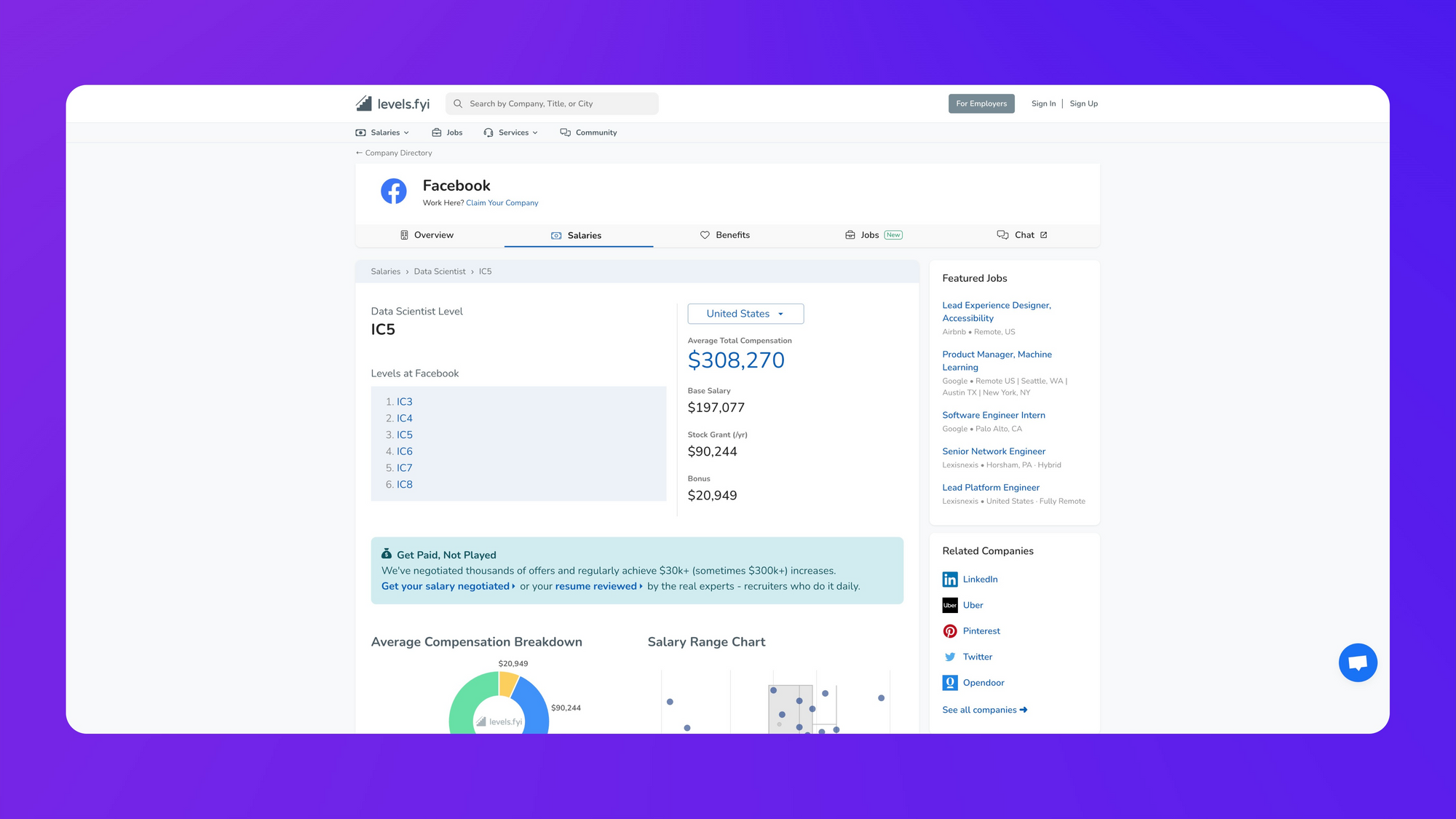
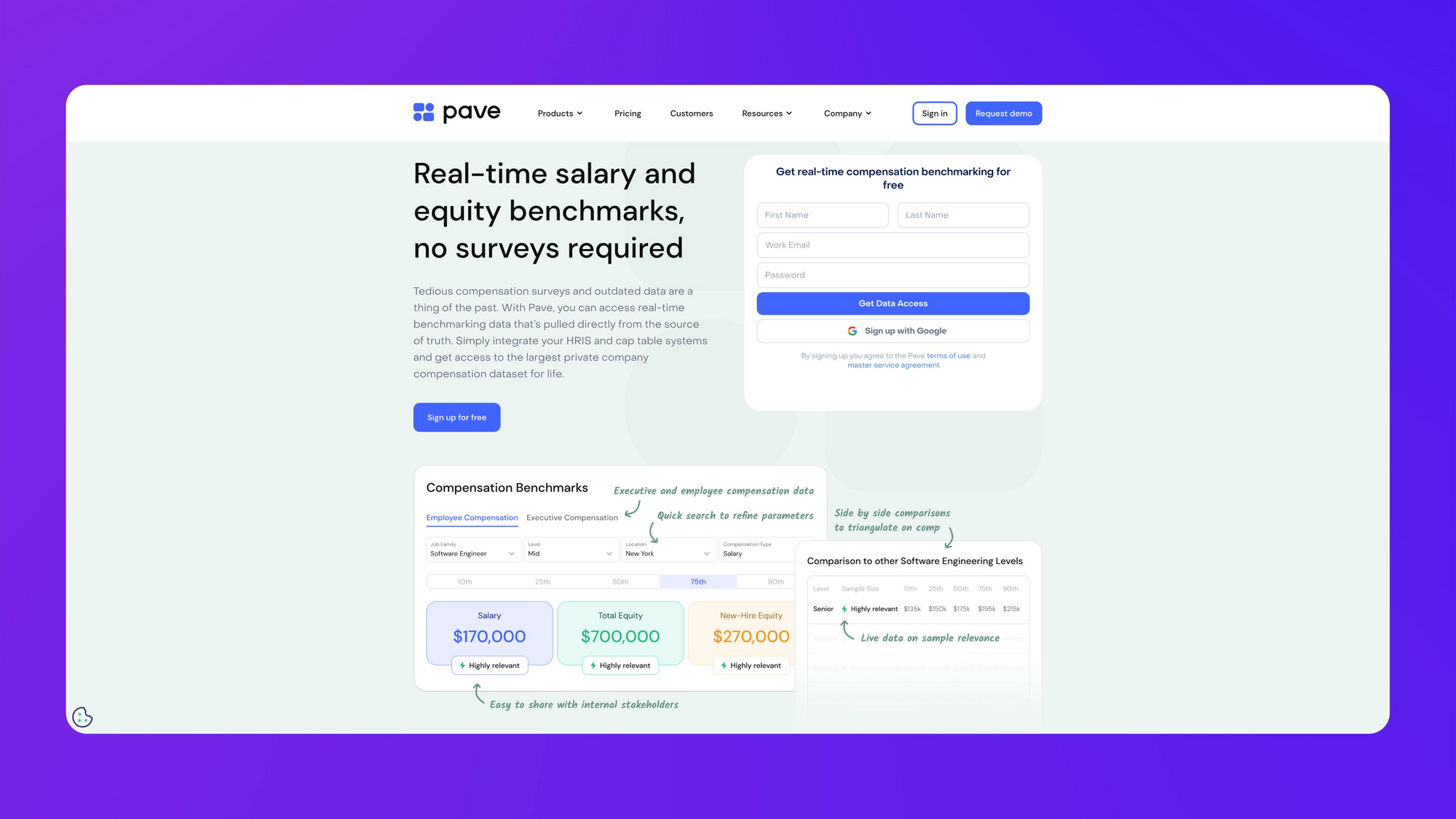
To determine your market compensation rate, start by researching other similar positions and candidates with platforms like:
- Pave,
- Glassdoor,
- or Salary.com.
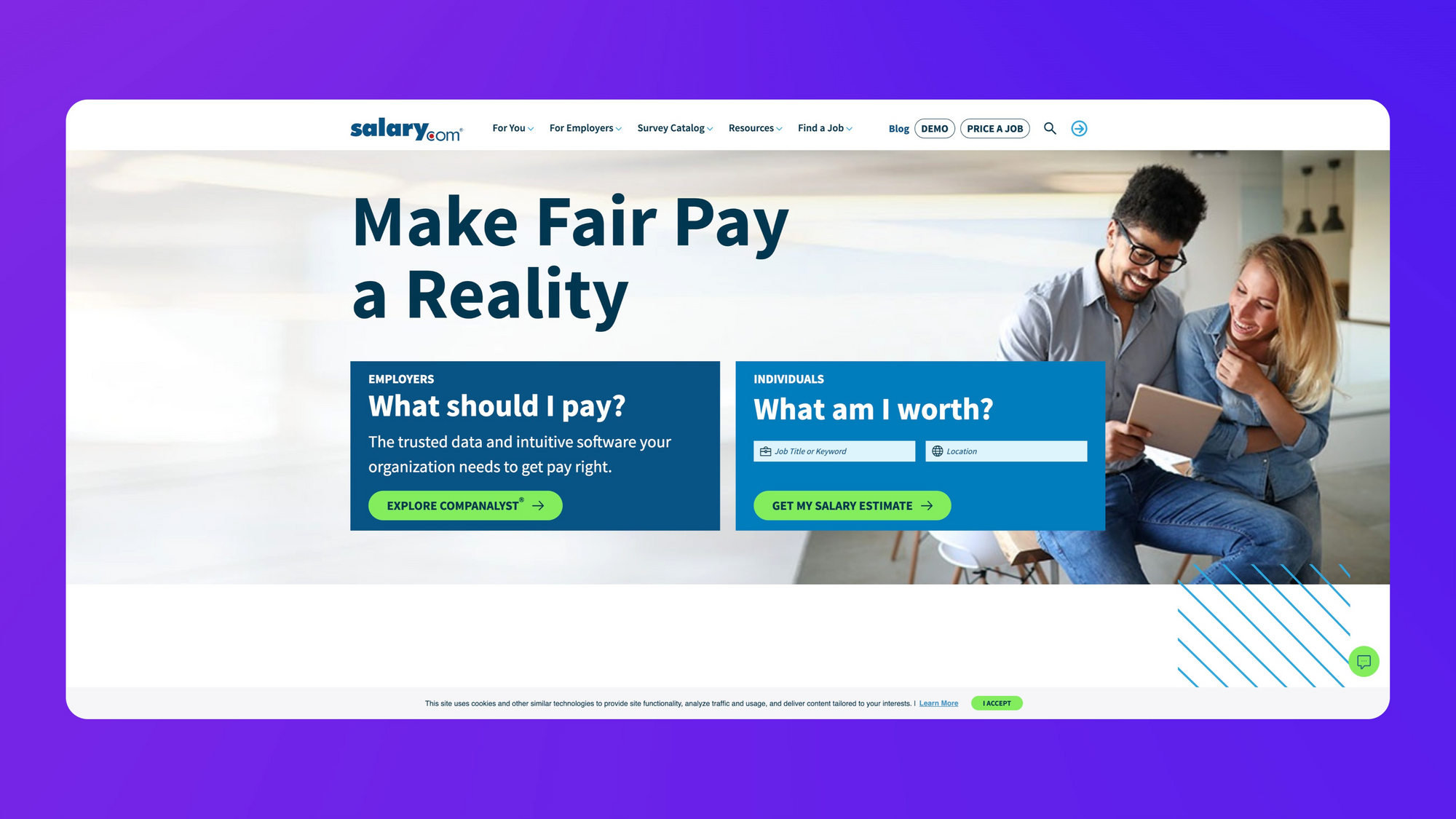
Like candidates, companies also use these platforms to gauge compensation ranges when hiring.
In California and New York, companies must publish compensation bands with job postings, making market compensation rates publicly available.
Use these data points to try and benchmark your offer:
- Level: Ask about the target level of this role with your hiring manager or recruiter. Inquire about the internal leveling system used by the company and what each level means. For instance, at what level do people managers start? Consider targeting a level higher than your current one.
- Role Title: Some tech roles have unclear titles, such as "product engineer" or "technical program manager." Ask questions to understand the role and find comparable rates.
- Industry: Understanding the industry landscape is useful. For example, a software engineer in finance (e.g., at a bank) typically earns less compensation than a software engineer in "Big Tech." However, negotiating beyond these industry norms is still possible. Knowing the market rate for a specific industry is helpful.
- Geography: Certain cities, such as New York, may pay more than other regions due to the higher cost of living. Consider the company's policy on remote work and geographic pay.
Create a salary range based on research on what comparable positions generally pay.
Once you’ve collected all this data, you’ll have a better sense of market compensation rates for the role you’re aiming for and the specific opportunity you may be interviewing for.
Aim High
Create a "thrill number" based on your financial situation and compensation research. This number is your ideal salary.
It is the highest salary you would accept and can be used for counteroffering.
Make sure it is realistic but higher than current market rates.
Consider an offer 30% higher than the market rate you researched.
Getting More Job Offers
Negotiating based on your market compensation can give you leverage, but having alternative offers is even more effective.
Market compensation can be a vague concept, with some companies claiming their rates differ from those based on your research or offering nuanced details like benefits or equity that make their offer stand out as competitive.
However, with an alternative offer, companies can't easily argue that their compensation package is competitive if it's lower.
Searching for Jobs
So, how can you ensure you have alternative offers? By planning your job search ahead of time.
Waiting for recruiters to reach out to you with opportunities minimizes your chances of having alternative offers and losing leverage in the negotiation.
Think of your job search as a process, like evaluating multiple options for buying a home or a new car.
Here are some tips to ensure a comprehensive job search process:
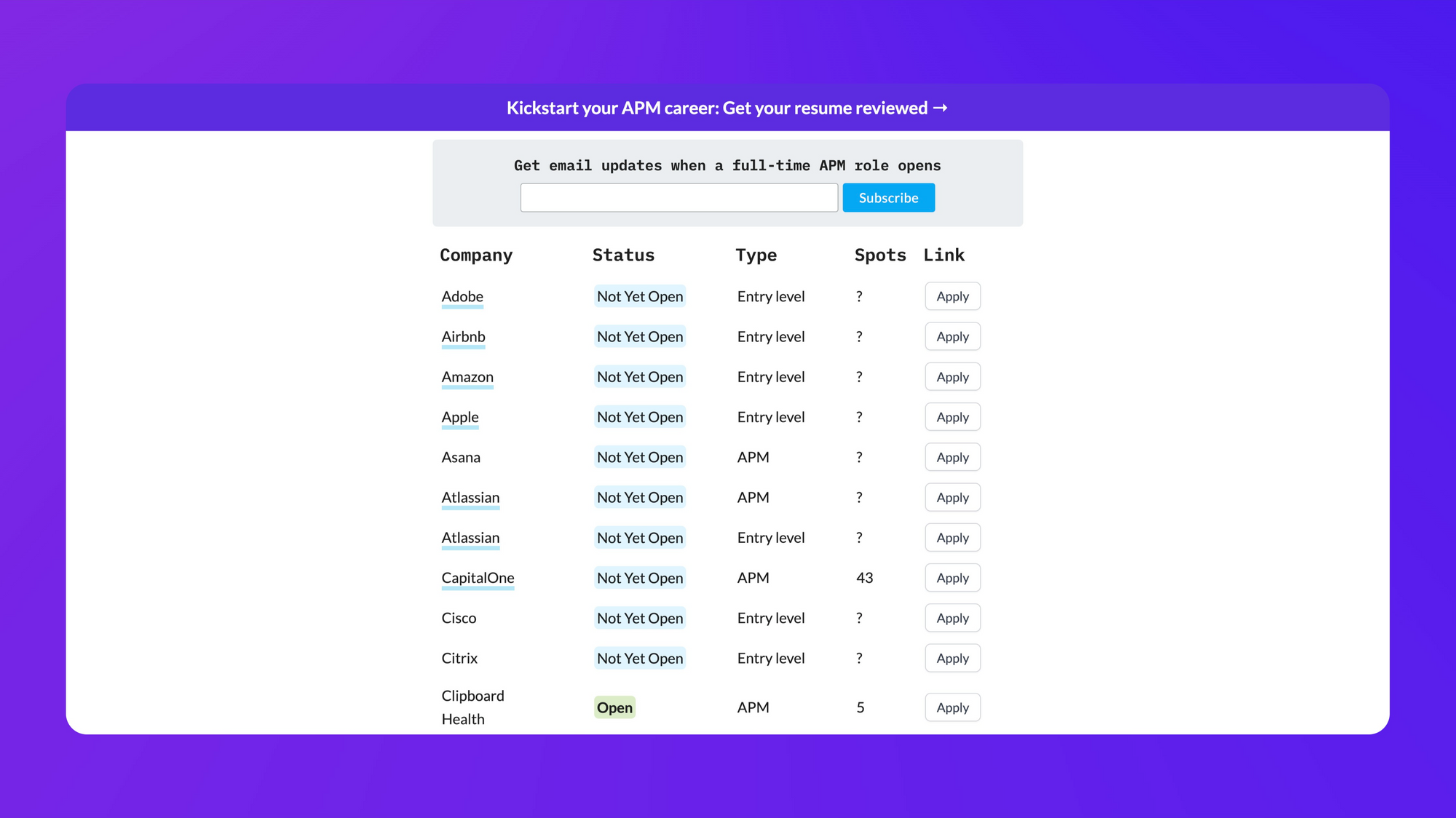
- Create a list of 25-50 companies you're interested in applying to
- Conduct initial research on each company to determine which ones to proceed with (keep the number realistic).
- Apply to all target companies in the same week.
- Schedule interviews and recruiter conversations to align with the timelines of all your opportunities. It's reasonable to adjust the schedule of interviews and recruiter conversations.
- If you receive an offer, inform your recruiter that you need time to evaluate it. Asking for 1-2 extra weeks is reasonable, and waiting can often increase your leverage in a negotiation.
Mentioning that you have another offer can encourage the recruiter to increase your offer.
Evaluate multiple options and compare the economics of each.
Evaluating an Offer
Congrats on reaching the recruiter offer stage!
This call is typically the final stage of the offer process, where the recruiter confirms they are preparing the offer and asks about your salary and compensation expectations.
Avoid sharing your salary expectations during this call.
Instead, focus on evaluating the offer. Sharing your expectations at this stage can set a lower negotiation baseline and potentially result in a lower offer.
Make the company propose the first number and then negotiate.
During the call, say things like:
- I'm very excited about this offer. Thanks so much!
- Do you have any feedback about what made me stand out as a candidate?
- Do you have any more information you could share about the role or the offer?
- Can you send me a written copy of the offer?
- I'd like to spend some time looking through the offer before I reply.
Tell the recruiter you need to take some time and will get back to them after the call.
Key Offer Details
An offer may consist of the following:
- Start Date: Is it flexible? Determined? Is there a range?
- Base Salary
- Equity: Is it vested? When is the cliff? What is the vesting schedule? What are the windows to exercise your stock options?
- Benefits: What benefits are included (e.g., maternity/paternity leave, fitness membership, meal plans)?
- Stipends: Are any work-from-home stipends included, for instance?
- Bonuses: Are there any signing bonuses? Relocation bonuses?
- Performance bonuses: What are the expected targets for performance bonuses? How are those determined?
- Salary increase expectations: When are salaries evaluated? How are they adjusted to match market compensation and factors like inflation? When and how are raises evaluated and awarded?
- Healthcare: What are the health insurance options available? How much do employers match?
- PTO: What is the paid time off policy at the company?
- Offer expiration date: Is an offer expiration date included? Is there an expectation of when they'd like to know if you're signing?
- Title: What is the title of the role?
- Leveling: What is the level of the role? What does this level mean at the company?
- Commission Plan: Especially for sales roles, what is the target quota, average contract value, and expectation around how many deals to close per quarter? When are commissions paid out (e.g., quarterly)?
There may be even more details relevant to your role, so list any relevant component to the offer.
Negotiable Terms
After identifying critical elements of your offer, you have a list of negotiable terms.
Review which terms are most and least important to you. This will help in your negotiation to know where you can budge and where you need to stand firm.
Preferences
If you're mainly concerned about saving for your child's college fund, you can prioritize cash over equity.
Let your recruiter know you want a higher cash component and are willing to compromise on equity.
Look for opportunities for mutual benefit, such as agreeing on a start date that works for you and the company.
Consider asking for higher cash compensation as a compromise if there are differences.
When working with your recruiter, focus on gathering all the relevant information about the offer before sharing your preferences.
If asked for your initial reaction, simply express your excitement and request more time to review the offer.
Your priority should be to fully understand the compensation package.
Negotiating an Offer
When negotiating, schedule another call with the hiring manager to discuss the role.
If the recruiter doesn't offer it, ask for it yourself.
During the call, your goals are to convince the hiring manager of your fit, better understand the offer and company, ask questions to help negotiate the offer and determine your interest in the company.
Approach each goal separately during the call.
Convincing the Hiring Manager
To increase your chances of negotiating a higher offer, show enthusiasm to your hiring manager by asking questions about the role. Here are some questions to ask:
- What led to creating this job posting?
- What are the key performance indicators (KPIs) for this role?
- What does excelling in this role look like?
- How might this role and other adjacent roles evolve over time?
Instead of talking about yourself, focus on understanding the role and the hiring manager's pain points that this role aims to address.
Understanding the Offer and Company
Spend time clarifying questions about the offer or the company by speaking with your hiring manager.
Here are some specific questions that you could ask:
- What are the team's general key performance indicators?
- What is the company's growth trajectory, and how are goals being achieved?
- How are team goals and targets set?
- How are disagreements in decision-making handled?
Questions to Ask Your Hiring Manager
If it helps, you can ask your hiring manager about negotiation-specific topics.
- Is it acceptable to negotiate for this role?
- Can you provide more information on how compensation was determined for this role?
- Can you tell me more about how the performance bonus will be determined? Will you be given early signals to predict whether or not you'll exceed expectations?
- How did you rank relative to others in terms of your interview performance?
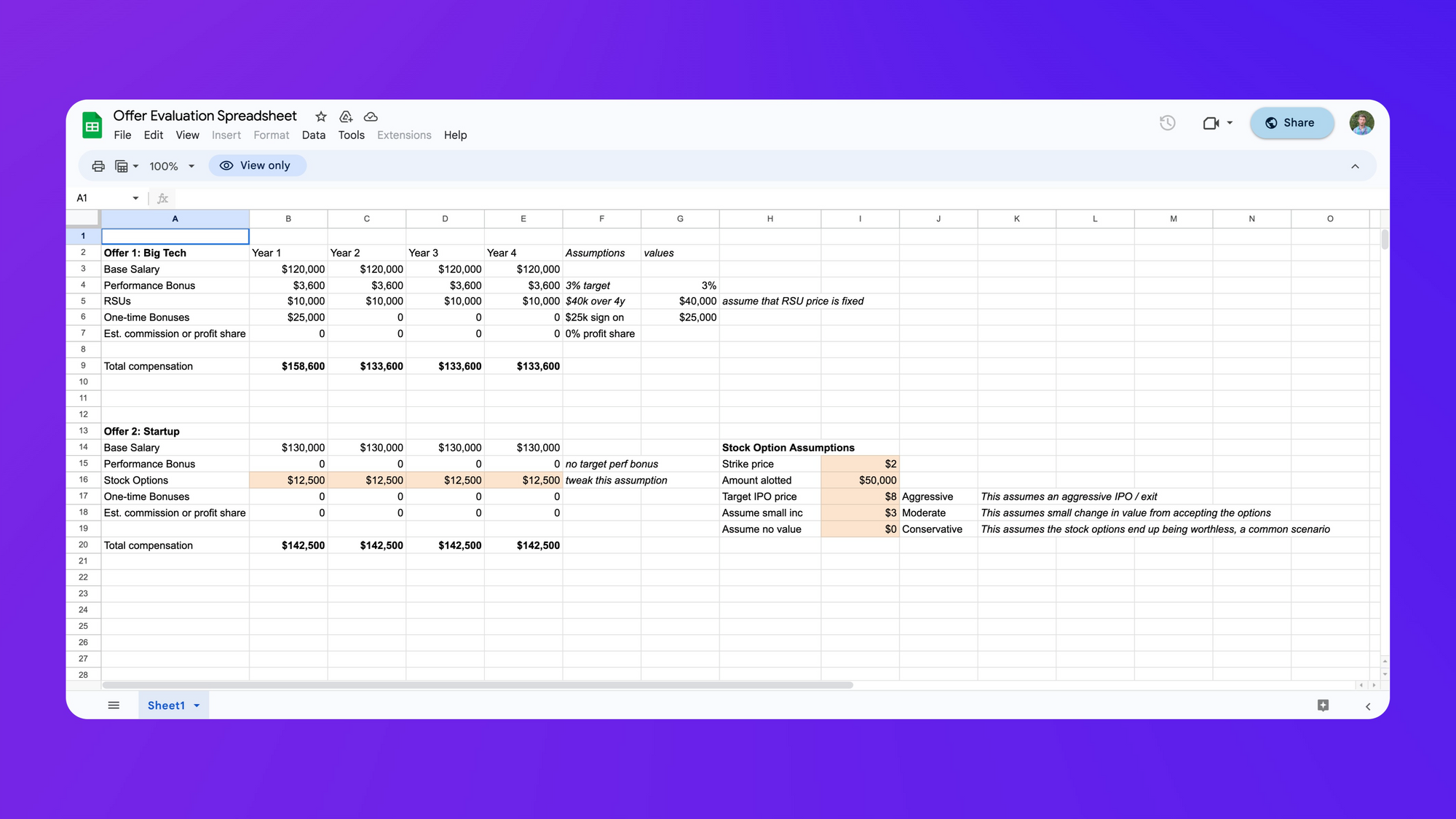
Comparing Multiple Offers (Template)
Although offers are not just about pay, it's still important to understand the financial aspect of each one.
Create a spreadsheet to compare them side-by-side.
Consider including your current offer for comparison. Here's an example table to evaluate your options.
Consider the following:
- Stock options and RSUs are risky. RSUs function like stocks that can rise or fall depending on the market. If you were given 100 RSUs of Google and the share price dropped by $10, you would earn $10 * 100 less. Stock options are even more speculative.
- A lower compensation offer may be worth it for the company culture and opportunity. Consider all aspects of the opportunity, not just the numbers.
Negotiating Startup Compensation and Equity
Unlike big tech companies with predefined salary ranges, startup offers often involve custom compensation packages that may include a base salary and equity in stock options or phantom equity.
Researching the Startup
Before negotiating an offer, conduct extensive research on the company. Start by looking into the startup's funding rounds, potential for growth, and financial stability.
Understanding concepts like series A, B, C, and D funding rounds is crucial to assessing your equity's value.
By knowing the company's funding history, you can determine its ability to succeed and generate returns on your equity.
To evaluate the financial stability of a startup, inquire about its
- runway,
- funding rounds,
- future funding plans,
- revenue, and user numbers.
This information provides a comprehensive view of the company's financial position and likelihood of success.
Key financial indicators include year-over-year revenue increase, cash reserves, and outstanding shares. While recruiters may not have all the answers, independent research and engaging with investor relations can provide valuable insights.
Negotiating with Startups
Effective negotiation with startups requires a strategic approach. Start by asking for 20% more than the base salary as a starting point for negotiations.
This tactic allows room for a middle ground where both parties can reach a satisfactory agreement.
Additionally, if you have competing offers, leverage them to your advantage. Startups may be more willing to negotiate equity than other forms of compensation.
Assessing the Offer
Consider whether the compensation package aligns with your goals and expectations.
While base salary is essential, consider the potential for equity to provide significant returns in the future. Evaluate the startup's long-term benefits and growth potential to make an informed decision.
Startups offer exciting opportunities for growth, and with the right approach, you can navigate job offers and secure a compensation package that suits your needs.
Negotiation Advice from Levels.fyi
This advice comes from Zaheer, the co-founder of Levels.fyi, in a mock negotiation simulation with Exponent.
Knowing Your Worth
- Familiarize yourself with industry standards and research average salaries for your desired role.
- Utilize deflection and question-flipping strategies to steer the discussion away from salary expectations.
- Focus on showcasing your skills, accomplishments, and how you can benefit the company.
- Set a high anchor and don't undervalue yourself or settle for less than you deserve.
The Power of Written Offers
- Request additional time to evaluate the offer thoroughly
- Ask for a written offer that includes comprehensive details such as equity and vesting schedules and additional benefits like 401k plans and commuter benefits.
- Use the written offer to gain a clear overview of the entire package and evaluate it objectively.
Negotiating Your Total Comp
- Discuss the base salary and any additional forms of compensation, such as restricted stock units (RSUs).
- Cite market data to justify your request.
- Emphasize the importance of fair and competitive compensation to ensure loyalty and motivation.
- Express your expectations, and if you have competing offers, make it known to the hiring manager.
Taking Negotiations Offline: The Email Advantage
- Take negotiations offline, preferably through email, for more time to consider and respond thoughtfully.
- Ask for additional time to discuss offers and think them through.
- In an email, write your thoughts and responses to articulate your points effectively and have a written conversation record.
Increase your offer with our expert negotiators
Your Aced membership awaits.
Aced is the fastest-growing tech interview prep platform. Get free interview guides, insider tips, and courses.
Create your free accountRelated Blog Posts

Netflix Salary Negotiation Guide